

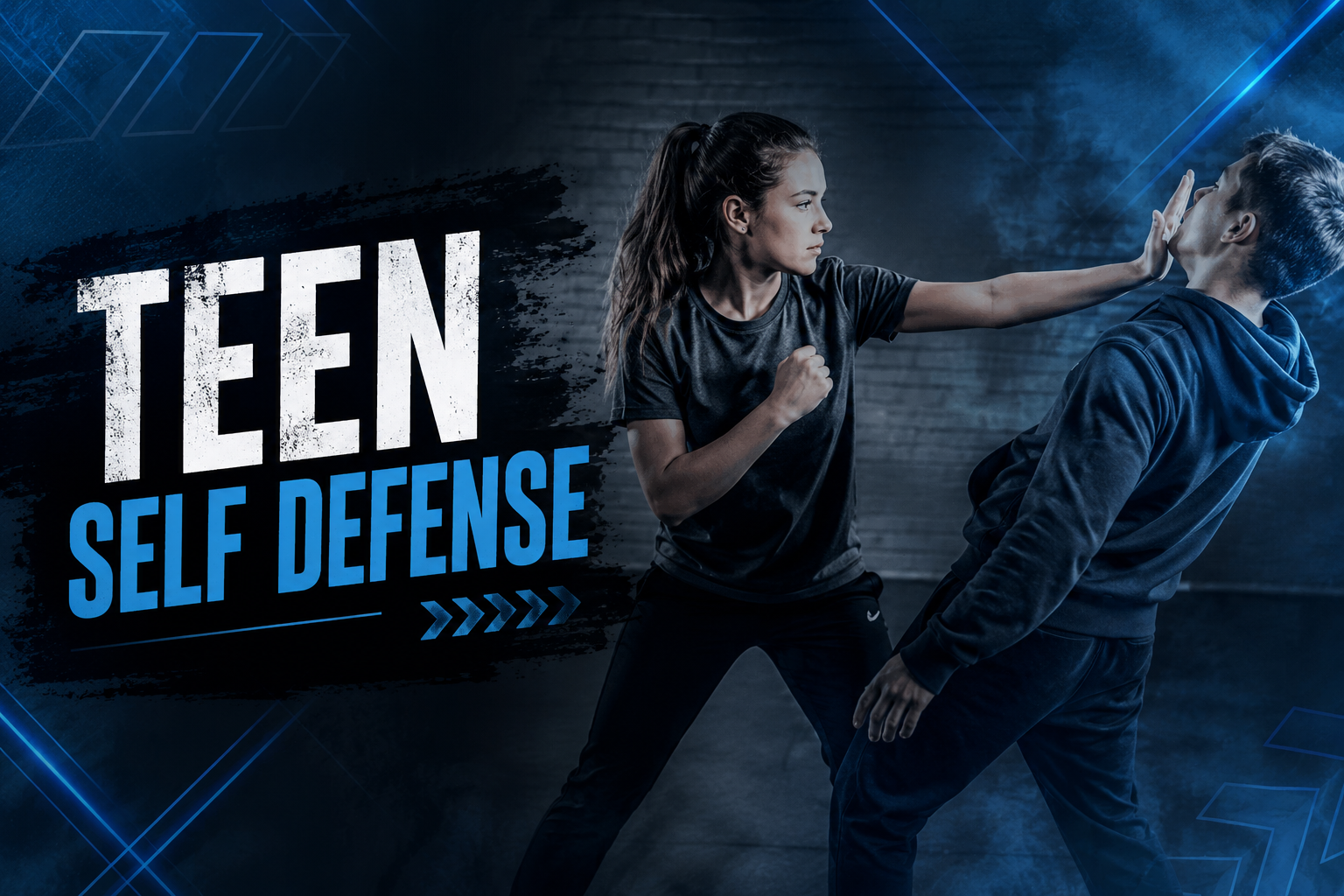
Teen Self-Defense
More Independence Means More Responsibility. We Help Teens Prepare for Both.
The teenage years bring a lot of firsts.
First jobs. Driving. Dating. Going places with friends. Staying home alone. Walking through parking lots without a parent. Attending parties, sporting events, concerts, and other activities. Eventually, leaving home for college or entering the workforce.
With that independence comes a need for something every teenager should have: the confidence and skills to make safer decisions when Mom or Dad isn't there.
At Apex Defensive Solutions, our Teen Self-Defense training helps young people develop practical personal-safety skills they can carry with them as they become more independent.
This isn't about teaching teenagers how to fight.
It's about teaching them how to recognize problems, make good decisions, establish boundaries, avoid unnecessary confrontations, protect themselves when necessary, and get home safely.
Self-Defense Starts With Making Good Decisions
Throwing a punch isn't the first step in self-defense.
Sometimes the most important decision a teenager can make is recognizing that a situation is going in the wrong direction and leaving before it gets worse.
We teach teens to pay attention to their surroundings, recognize concerning behavior, trust when something doesn't feel right, communicate confidently, establish boundaries, and understand that walking away isn't weakness.
We also discuss distractions and everyday habits that can affect personal safety.
Our goal is simple:
Recognize problems earlier so you have more options to deal with them.
Confidence Without Creating a False Sense of Invincibility
Teenagers don't need to believe they're unbeatable.
They need to understand what they're capable of—and recognize when the smartest decision is to get away.
Through hands-on training, teens can learn practical physical skills for situations where avoidance and communication aren't enough.
Training may include:
Situational awareness
Recognizing warning signs and concerning behavior
Verbal boundaries and confident communication
Avoidance and de-escalation
Creating and maintaining distance
Basic defensive movement and positioning
Practical striking skills
Escaping common grabs and holds
Responding to attempted restraint
Basic ground-defense concepts
Getting back to their feet
Protecting themselves while creating an opportunity to escape
Knowing when to disengage and seek help
Everything comes back to the same objective:
Get away. Get somewhere safe. Get help.
Preparing Teens for the Real World
As teenagers get older, parents naturally have less control over every environment their child enters.
You won't always be standing beside them.
That's why we want teens to begin developing their own awareness, judgment, confidence, and personal-safety habits.
We want them thinking about questions like:
Who am I with?
What's happening around me?
Where are my exits?
Is this situation changing?
Is someone ignoring my boundaries?
Do I feel safe here?
If something happens, what's my way out?
Those are skills that extend far beyond a self-defense class.
Training That Treats Teens Like Young Adults
Teenagers aren't little kids, and we don't teach them like they are.
Our teen program addresses personal safety in a way that respects the increasing independence and real-world situations teenagers experience.
At the same time, they're still learning how to navigate those situations.
Apex provides a controlled environment where teens can ask questions, practice skills, make decisions, and learn from realistic scenarios before they're faced with difficult decisions in the real world.
Parents Are Part of the Conversation
Parents play an important role in teen safety.
We encourage parents to understand what their teenager is learning and continue those conversations at home.
Talk about expectations. Talk about getting home safely. Talk about what happens if a ride falls through, a friend makes a bad decision, someone crosses a boundary, or your teenager ends up somewhere they don't feel comfortable.
Most importantly, make sure your teenager knows they can call you when something goes wrong.
The goal isn't to control every situation your teenager encounters.
It's to help prepare them to make better decisions when you're not there to make those decisions for them.
Skills They'll Carry Into Adulthood
Eventually, teenagers become adults.
They leave home. They go to college. They start careers. They travel. They form relationships. They live increasingly independent lives.
The awareness, confidence, communication, decision-making, and personal-safety skills they develop now can follow them into every one of those environments.
We can't prepare teenagers for every situation they'll ever encounter.
But we can give them more knowledge, more confidence, and more options when something goes wrong.
Give Them Independence. Give Them Confidence. Give Them Skills to Protect Themselves.
Prepared People Are Harder to Victimize.
Teen Self-Defense — FAQ
What ages is the Teen Self-Defense class for?
Our Teen Self-Defense class is designed for teenagers who are beginning to experience more independence and responsibility.
If your child is close to the age range and you're unsure whether the Teen or Children’s class would be the better fit, contact Apex and we'll help you decide.
Does my teen need any previous experience?
No.
No martial arts, sports, or self-defense experience is required. Our training is designed for everyday teens at all experience levels.
Are you teaching teenagers how to fight?
No. In fact, one of the most important things we teach is how to avoid unnecessary fights altogether.
Physical self-defense is only one part of the program. We emphasize awareness, communication, boundaries, de-escalation, decision-making, creating distance, and knowing when to leave.
When physical skills are taught, the objective is protecting yourself long enough to create an opportunity to escape and get help.
What will my teen learn?
Training may include:
Situational awareness
Recognizing concerning behavior and warning signs
Verbal boundaries and confident communication
Avoidance and de-escalation
Creating and maintaining distance
Basic defensive movement
Practical striking skills
Escaping common grabs and holds
Responding to attempted restraint
Basic ground-defense concepts
Getting back to their feet
Creating opportunities to escape
Making safer decisions under pressure
Specific material may vary depending on the length and focus of the class.
Do you discuss bullying?
Bullying may be discussed as part of boundaries, communication, avoidance, and personal safety.
However, we don't want teenagers walking away believing physical force is the answer to every conflict at school.
We emphasize recognizing problems, seeking appropriate help, communicating clearly, avoiding unnecessary escalation, and understanding the difference between conflict and situations where physical self-defense may become necessary.
Do you talk about dating and relationships?
Age-appropriate discussions about personal boundaries, consent, controlling behavior, uncomfortable situations, and respecting another person's boundaries may be incorporated into teen safety training.
As teenagers begin dating and developing more independence, understanding how to establish and respect boundaries becomes an important part of personal safety.
Will you talk about parties, alcohol, or other situations teens may encounter?
Depending on the age group and class, we may discuss how decision-making, distractions, peer pressure, impaired judgment, and the environment around you can affect personal safety.
Our goal isn't to lecture teens.
It's to help them think ahead and recognize how their decisions can either give them more options or fewer options when something goes wrong.
Will my teen get hit during training?
Some exercises may involve controlled physical contact and appropriate resistance.
Training is supervised, techniques are introduced progressively, and safety is always a priority.
We want the training to be useful without unnecessarily putting students at risk.
What if my teen is shy or lacks confidence?
That's one of the reasons this type of training can be valuable.
Students don't need to arrive confident, loud, athletic, or outgoing.
We provide opportunities for teens to practice using their voice, establishing boundaries, making decisions, and performing physical skills in a controlled environment.
Confidence is something we work to build through training.
What if my teen is already athletic or involved in martial arts?
They're still welcome.
Athletic ability and martial arts experience can certainly be helpful, but personal safety also involves awareness, communication, decision-making, boundaries, avoidance, and understanding when not to fight.
Does my teen need to be physically fit?
No.
You don't need to be an athlete to learn personal-safety skills. We work with students at different fitness and ability levels whenever reasonably possible.
What if my teen has an injury, disability, or physical limitation?
Please contact Apex before class.
We'll discuss their individual needs and determine what accommodations or modifications may be appropriate so they can participate safely.
What should my teen wear?
Comfortable athletic clothing that allows them to move freely is recommended.
Avoid excessive jewelry or anything that could interfere with physical activity. Any additional requirements will be included with the specific class information.
Do parents stay for the class?
Parents are welcome to be involved and understand what their teenager is learning.
Teenagers also benefit from having opportunities to learn, make decisions, and develop confidence independently.
The exact level of parent participation may vary depending on the class format.
What should we talk about after class?
Keep the conversation going.
Ask your teenager what they learned. Talk about situations they encounter at school, work, while driving, with friends, while dating, or when they're out without you.
Discuss family expectations and make plans for situations such as:
“What happens if your ride leaves?”
“What if you end up somewhere you don't feel safe?”
“What if someone won't respect your boundaries?”
“Who can you call?”
“Where can you go?”
One of the best things parents can do is make sure their teenager knows they have a safe way to ask for help when something goes wrong.
Will one class make my teen capable of handling any dangerous situation?
No.
No responsible self-defense program can guarantee what will happen during a real confrontation.
Our goal is to improve your teenager's awareness, confidence, decision-making, communication, and physical options so they're better prepared than they were before.
Is this class only useful if my teen is worried about being attacked?
Not at all.
Many of the skills taught in self-defense apply to everyday life.
Awareness, confidence, communication, establishing boundaries, recognizing problems, making decisions under pressure, and knowing when to leave are skills teenagers can carry into college, work, relationships, travel, and adulthood.
Still Have Questions?
Choosing a self-defense class for your teenager is about more than teaching them physical techniques.
It's about helping them develop the awareness, confidence, judgment, and practical skills they'll need as they become more independent.
If you have questions about the Teen Self-Defense program or whether it's appropriate for your teenager, contact Apex Defensive Solutions.
Prepared People Are Harder to Victimize.